PROJECT EULER · #0411
Uphill Paths
Let
We wish to form a path from
Let
For example, if
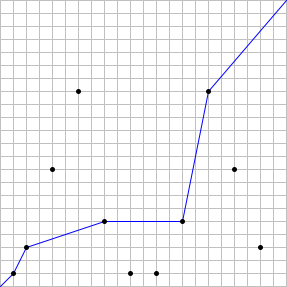
It can also be verified that
Find
Write-up coming later
The complete problem is available here. An approach, code, and answer will be added later.
PROJECT EULER · #0411
Let
We wish to form a path from
Let
For example, if
It can also be verified that
Find
The complete problem is available here. An approach, code, and answer will be added later.